



Misaligned teeth threaten health: Braces are possible at any age
Experts emphasize that orthodontic treatment is not just for aesthetics, noting that braces or clear aligners can be applied successfully at any age.


By Bilge Türk | Go Best Dentists
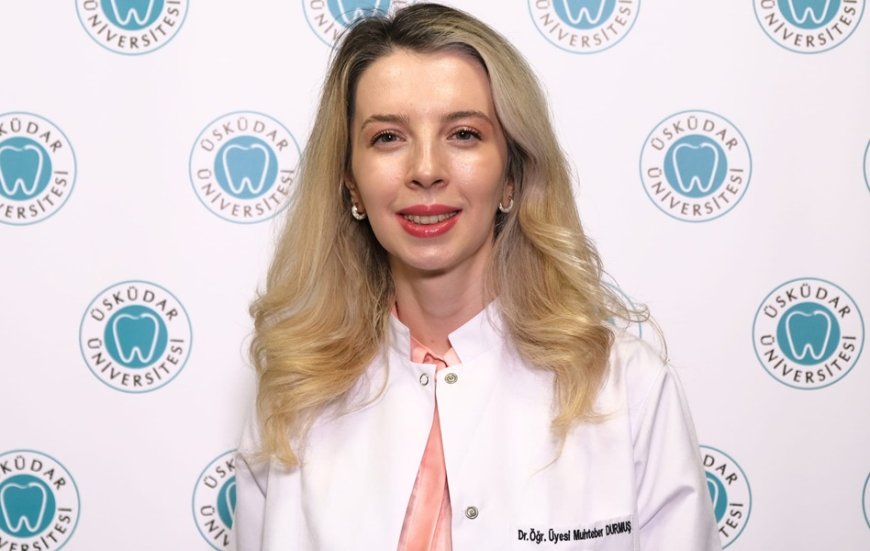
ISTANBUL, TURKEY — Dr. Muteber Durmus, an orthodontist at Uskudar University Dental Hospital, announced that misaligned teeth are not merely an aesthetic concern but a significant problem directly impacting both oral and general health.
Breaking the common misconception that orthodontic treatments like braces and clear aligners are exclusively for children, experts emphasize that individuals of all ages can benefit from them if they have healthy gums and bone structure. While early orthodontic examinations prevent severe skeletal issues that might later require complex surgery, the success of adult treatments heavily relies on strict oral hygiene and post-treatment retention protocols.
Misaligned teeth negatively impact general health
Dental crowding, frequently associated only with physical appearance and smile aesthetics by the general public, actually sets the stage for a wide range of medical problems extending from the digestive system to the head and neck muscles. Considering that digestion begins in the mouth, the inability of teeth to close correctly means that food is sent to the stomach without being adequately chewed, which paves the way for chronic digestive system disorders in the long term. Furthermore, cleaning overlapping and rotated teeth with a toothbrush or dental floss becomes physically challenging.
Providing detailed evaluations on the subject, Dr. Muteber Durmus stated that misaligned teeth negatively affect general health. Pointing out that uncleanable surfaces harbor serious risks, Durmus noted that this situation could lead to tooth decay, plaque accumulation, discoloration, and gingivitis problems over time.


"At the same time, incorrect positioning and improper closure of the teeth put an extra load on the jaw joint. This condition can lead to jaw and headaches, chewing difficulties, and even speech disorders in some cases," Durmus added.
First orthodontic examination should be at age 7
One of the most common misconceptions in society regarding orthodontic treatments is waiting for all of a child's primary teeth to fall out and all permanent teeth to erupt. However, modern dentistry practices and the general guidelines of expert organizations such as the
Underlining that the first orthodontic examination in children should absolutely be performed at the age of 7, Durmus emphasized that this is a critical turning point for facial development.


"At this age, children have both primary teeth and permanent teeth together in their mouths. Thanks to early examination, problems such as the eruption direction of the teeth, jaw development, closure problems, and space deficiency can be detected at an early stage. By making an early intervention when necessary, it becomes possible to prevent jaw asymmetry or greater orthodontic problems that may occur in the future."
Choosing between clear aligners and traditional braces
With rapidly advancing technology, orthodontic treatment methods have significantly diversified. Metal brackets, which were the only option in the past, have begun to be replaced by porcelain brackets and completely custom-made clear aligner systems. Noting that clear aligners and traditional braces serve the same purpose—bringing teeth to their ideal and healthy positions in three-dimensional space—Durmus reminded that there are differences in application methods and patient comfort.
Stating that clear aligners are almost invisible appliances that are custom-produced, can be removed when necessary, and are changed at regular intervals, Durmus said they are much more aesthetic and comfortable in daily use. The ability to remove them while eating or brushing teeth provides great convenience to the patient. Traditional braces, on the other hand, consist of brackets and wires fixed to the teeth. In this case, without the need for the patient's individual motivation, these appliances help direct tooth movements in a highly controlled manner. A specialist determines which method will be selected based on the patient's dental structure and treatment needs.
Orthodontic treatment is not exclusive to childhood
Adults often approach orthodontic treatment with the prejudice that braces cannot be worn after a certain age. However, the biology of tooth movement within the jawbone is a continuous process throughout life. Although there are minimal differences in the speed of tooth movement in adult orthodontics, it is entirely possible to achieve perfect results both aesthetically and functionally. The only physiological barrier to treatment is not age, but insufficient bone support or untreated advanced gum disease.
Expressing that braces treatment can be performed safely and frequently in adults, Durmus shared vital insights on the subject. Orthodontic treatment is not just an application for childhood; teeth can be moved at adult ages with specific planning. The determining factor here is not age, but dental and gingival health. With a detailed examination, teeth can be brought to their ideal position with methods such as braces or clear aligners in suitable cases.
Strict oral hygiene is crucial during treatment
It is a known clinical fact that orthodontic appliances, whether fixed metal brackets or clear aligners, create extra retention areas for food accumulation in the mouth. During the treatment period, teeth must be cleaned with much more care than usual. Otherwise, the plaque that accumulates around the brackets and is not cleaned can cause permanent stains on the enamel surface known as "white spot lesions," initial cavities, and severe gingivitis that can bring the treatment to a halt.
Touching upon how cleaning and maintenance should be done while wearing braces, Durmus highlighted that oral hygiene is one of the most important issues in braces treatment. Since brackets and wires can cause food residues to accumulate much more easily, the cleaning routine must be done meticulously. Teeth should be brushed with a soft-bristled orthodontic toothbrush at least twice a day, preferably after every meal. Unreachable areas should be cleaned with an interdental brush, and the spaces between teeth must be maintained using traditional or orthodontic floss.
Retention phase is vital for permanent results
The treatment is not considered entirely finished on the day the wires or aligners are removed after months or years of effort and cost. The periodontal fibers connecting the teeth to the jawbone tend to remember their old misaligned positions like a "memory" and have a high tendency to return to that position—a process known as relapse. For the bone tissue to fully adapt to the new position, orthodontists transition to a passive treatment period called the "retention" phase. Failure to follow the rules during this period can cause the teeth to deteriorate again within months.
Advising patients to use their appliances without interruption so that their teeth do not shift back after the orthodontic treatment is finished, Durmus summarized the process clearly. Appliances called 'retainers' or 'Essix plates' are used to prevent the teeth from deteriorating. These tools help the teeth get used to their new positions and support the preservation of the achieved result. Regular use and compliance with physician controls are of vital importance for the permanence of the treatment.
What's Your Reaction?
 Like
0
Like
0
 Dislike
0
Dislike
0
 Love
0
Love
0
 Funny
0
Funny
0
 Wow
0
Wow
0
 Sad
0
Sad
0
 Angry
0
Angry
0

Editor | GoBestDentists.com delivers reliable and up-to-date dental health information by featuring expert opinions from dentists and oral health professionals. The platform covers the latest developments in dentistry, modern treatment methods, and innovative dental technologies with a commitment to accuracy, transparency, and patient-focused reporting. All content is prepared in line with international health journalism standards and based on verified sources and clinical insights.














Comments (0)